
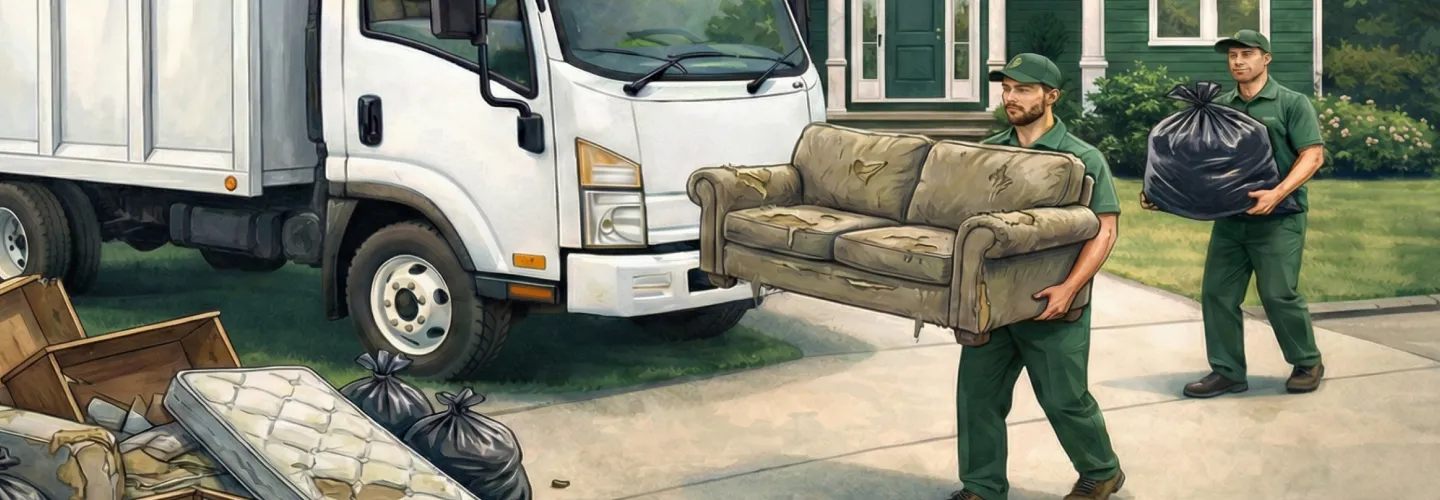
Duluth Appliance Removal Services
Choose our appliance removal service for hassle-free pickup, eco-friendly disposal, and courteous professionals who handle all the heavy lifting—making it easy to clear out unwanted appliances safely and responsibly.
Get a Free QuoteOur Duluth Junk Removal Services
Appliance Removal in Duluth, GA – Local Service Guide
Appliance removal in Duluth, GA is a common need for homeowners and businesses, especially during seasonal upgrades, property renovations, or after major life events. In neighborhoods like Sugarloaf Country Club and Berkeley Lake, residents often schedule appliance removal when replacing outdated refrigerators, washers, or ovens. Local disposal options include donation, recycling, or responsible disposal through city-approved channels. Access and logistics can vary—tight driveways or inclement weather may require special planning, especially for large or heavy items. For residential spaces such as garages or basements, spring cleanouts and post-storm debris are frequent triggers, particularly in areas prone to flooding or with dense tree coverage. Commercial clients in downtown Duluth or along Pleasant Hill Road often require discreet, after-hours removal to minimize business disruption, with volume and timing tailored to industry needs. Specialty projects, like estate cleanouts or construction debris removal, demand careful coordination and adherence to Duluth’s property guidelines. For more on local rules and resources, visit the Duluth Public Works Department.
Key Considerations for Appliance Removal in Duluth
- Timing removals around weather and neighborhood access
- Checking for required permits or city guidelines
- Choosing proper disposal or recycling channels
- Planning for large-volume or specialty items
- Coordinating with property managers or HOAs
- Understanding category-specific logistics for residential and commercial needs
Benefits of Appliance Removal in Duluth
Fast and Reliable Service
Eco-Friendly Appliance Disposal
Licensed and Insured Team
Upfront Transparent Pricing
Convenient Scheduling Options
Safe Removal and Hauling
Coordinating Appliance Removal with Duluth's Public Works and Gwinnett County Disposal Programs
Duluth, Georgia, is located within Gwinnett County, and residential solid waste services are primarily managed at the county level. Residents seeking to dispose of large household appliances such as refrigerators, washing machines, dryers, dishwashers, and ovens must coordinate with their designated waste hauler or utilize Gwinnett County disposal facilities. Appliances are generally not accepted through standard curbside trash collection due to their size, weight, and material composition.
Key coordination steps include:
- Contact your waste hauler to schedule a bulk item pickup; advance notice of 48–72 hours is typically required
- Verify accepted items — most haulers distinguish between standard appliances and those containing refrigerants
- Prepare appliances curbside by removing all food, water, and detachable components before pickup day
- Confirm any applicable fees — bulk appliance pickup may carry surcharges beyond standard service rates
Residents may also contact the Duluth Public Works Department for guidance on infrastructure-related concerns during appliance removal, such as driveway access or right-of-way considerations.
Duluth Public Works Department
3167 Main Street, Duluth, GA 30096
Phone: (770) 476-3434
Official Website: Duluth Public Works Department
EPA Refrigerant Recovery Requirements for Appliance Disposal in Duluth
Federal law imposes strict requirements on the disposal of appliances containing refrigerants, including refrigerators, freezers, air conditioning units, and dehumidifiers. Under EPA Section 608 regulations, refrigerants such as R-12, R-22, and R-410A must be properly recovered by an EPA-certified technician before any appliance is scrapped, recycled, or sent to a landfill. Venting refrigerants into the atmosphere is a federal violation subject to fines of up to $44,539 per day per violation.
Duluth residents and haulers must ensure compliance with the following:
- Certified recovery — only technicians holding EPA Section 608 certification may extract refrigerants from sealed systems
- Documentation — records of refrigerant recovery must be maintained for a minimum of three years
- Prohibited venting — intentional release of CFC, HCFC, or HFC refrigerants is illegal under the Clean Air Act
- Scrap metal dealers — facilities accepting appliances must verify refrigerant removal before processing
The Georgia Environmental Protection Division (GA EPD) oversees state-level enforcement of hazardous substance handling, including refrigerant management, in coordination with EPA Region 4.
Georgia Environmental Protection Division
2 Martin Luther King Jr. Drive SE, Suite 1456, Atlanta, GA 30334
Phone: (404) 656-4713
Official Website: Georgia Environmental Protection Division
Duluth Code Compliance Standards for Appliance Storage and Removal
The City of Duluth enforces property maintenance and code compliance standards that directly affect how residents store and dispose of old appliances. Abandoned or improperly stored appliances on residential properties — including units left in yards, driveways, or visible from public rights-of-way — may constitute code violations subject to enforcement action. The Duluth Code Compliance division investigates complaints and conducts inspections to ensure neighborhood preservation.
Residents should be aware of the following requirements:
- No outdoor storage of inoperable appliances on residential property visible from the street or neighboring properties
- Timely removal — appliances replaced during renovations or upgrades should be removed promptly to avoid violation notices
- Child safety hazards — abandoned refrigerators and freezers with intact doors pose entrapment risks and may trigger immediate enforcement
- Renovation debris — appliance removal associated with building renovations may require coordination with Duluth Planning & Development for applicable permits
- Violation penalties — code enforcement actions may include written warnings, fines, and mandatory abatement timelines
Property owners who receive a code violation notice related to appliance storage should contact the Code Compliance division promptly to discuss remediation timelines and approved disposal methods.
Duluth Code Compliance Division
3167 Main Street, Duluth, GA 30096
Phone: (770) 476-3434
Official Website: Duluth Code Compliance
Georgia Solid Waste Management Act Compliance for Appliance Recycling
Georgia's Solid Waste Management Act (O.C.G.A. § 12-8-20 et seq.) establishes the regulatory framework governing the collection, transportation, and disposal of solid waste throughout the state, including large household appliances. The Act requires that all solid waste haulers operating in Georgia maintain proper permits and transport materials only to facilities authorized by the Georgia Environmental Protection Division. Appliances classified as "white goods" — refrigerators, stoves, washers, dryers, water heaters, and similar large metal items — are subject to specific handling and recycling considerations.
Key state-level requirements include:
- Permitted haulers only — all entities transporting appliances for disposal or recycling must hold valid Georgia solid waste handling permits
- Scrap metal recycling — white goods contain recoverable steel, copper, and aluminum; Georgia encourages diversion from landfills through scrap metal recycling
- Hazardous component removal — mercury switches (found in older chest freezers and pre-2006 appliances), PCB-containing capacitors, and refrigerant oils must be removed before metal recycling
- Landfill acceptance — while Georgia does not impose a statewide ban on appliance landfilling, many permitted landfills restrict white goods or require refrigerant certification prior to acceptance
Gwinnett County operates recycling and disposal facilities that accept appliances from Duluth residents, subject to facility-specific rules and potential fees.
Stormwater and Environmental Protection During Appliance Removal in Duluth
Appliance removal activities in Duluth must account for environmental protection requirements, particularly regarding stormwater management and pollution prevention. The City of Duluth maintains an active Stormwater Management program designed to protect local waterways, including tributaries of the Chattahoochee River watershed. Improper handling of appliances during removal can introduce pollutants — including refrigerant oils, compressor lubricants, and residual chemicals — into stormwater systems.
Environmental compliance considerations include:
- Fluid containment — all oils, refrigerants, and residual water must be drained and contained before transporting appliances; spills on driveways or streets can enter storm drains
- No curbside dumping — appliances left at the curb without scheduled pickup may leak fluids during rain events, creating stormwater contamination
- Loading area protection — use drip pans or absorbent materials beneath appliances during staging and loading to prevent ground contamination
- Illegal dumping penalties — abandoning appliances on public or private property violates Georgia law and Duluth municipal ordinances, with penalties including fines and cleanup cost recovery
- Report illegal dumping — residents can report abandoned appliances to the Duluth Police Department or Code Compliance for investigation
Duluth Stormwater Management
3167 Main Street, Duluth, GA 30096
Phone: (770) 476-3434
Official Website: Duluth Stormwater Management
What Neighborhoods Do We Serve Throughout Duluth, GA?
- Downtown Duluth: The revitalized town center features a mix of older commercial buildings and newer mixed-use developments. Appliance removal in this area may require coordination with building management for loading dock access, and narrow side streets can limit truck maneuverability during business hours.
- Parsons Run: This established single-family residential community features homes built in the early 2000s with standard driveway access. Appliance replacements during kitchen and laundry renovations are common; HOA guidelines may govern curbside staging times and placement.
- Sugarloaf Country Club: A gated community with larger estate-style homes that may require advance coordination for gate access and longer driveway navigation. Appliance removal crews should confirm entry procedures and any community-specific scheduling restrictions.
- Berkeley Hills: This neighborhood of single-family homes features moderate lot sizes and accessible street layouts. Older appliances in homes approaching 20+ years may contain mercury switches or outdated refrigerants requiring certified handling.
- Duluth Town Green Area: Adjacent to the festival and event grounds, this mixed-use corridor includes residential units above commercial spaces. Multi-story access, narrow stairwells, and limited street parking present logistical considerations for appliance removal scheduling.
- Rogers Bridge Area: Located near the Chattahoochee River corridor, properties in this area are subject to heightened environmental sensitivity. Appliance removal must ensure zero fluid discharge to protect riparian buffers and comply with Duluth's stormwater protection ordinances.